
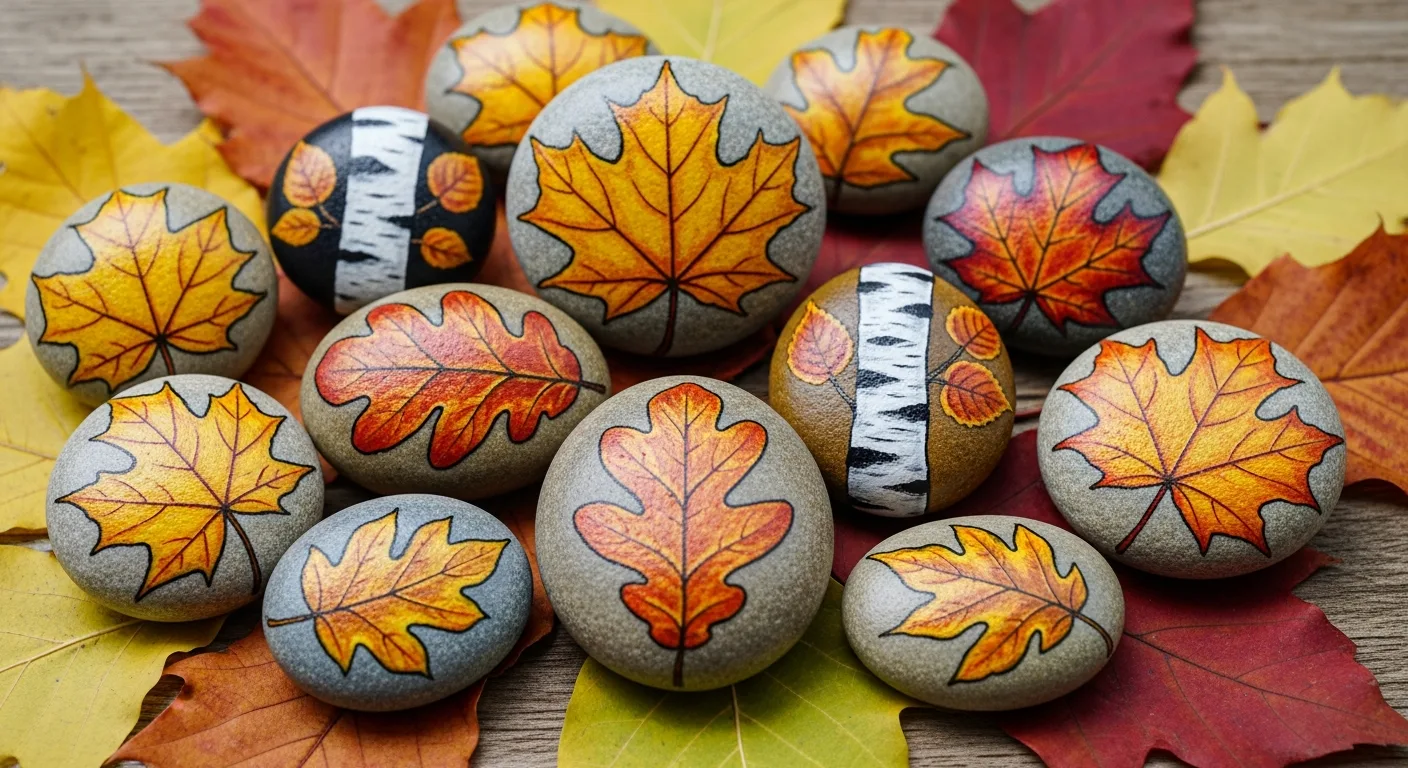
Autumn leaf rock painting taps into one of the most visually spectacular events in the natural world: the seasonal transformation of leaves from green to an extraordinary range of golden yellows, fiery oranges, deep reds, and rich burgundies. Capturing this beauty on stone creates rocks that feel like a preserved moment of seasonal perfection.
Method 1: Leaf Tracing
The leaf tracing method uses a real autumn leaf as a template:
- Collect a selection of leaves: maple, oak, birch, and beech are ideal for their distinctive silhouettes. Press flat between books if not flat naturally.
- Position the leaf on your primed stone and lightly trace around its outline with a sharp pencil.
- Remove the leaf and paint the traced shape in your chosen autumn colours. Work outward from the central vein to the leaf edge for a natural feel.
- Once the base colour is dry, add vein details with a fine liner brush in a slightly darker shade of the same colour.
The result is an accurate, botanically-realistic leaf portrait that celebrates the actual leaf species you collected. This works beautifully with any leaf variety - experiment with compound leaves (ash, rowan) for more complex designs.

Method 2: Nature Printing
Nature printing creates an impression of the leaf's surface texture directly on the stone:
- Apply a thin, even coat of paint to the underside (back) of a real leaf using a brush or sponge.
- Press the painted leaf firmly onto the primed stone, maintaining even pressure across the entire surface.
- Lift the leaf cleanly and allow to dry. The result is a detailed print showing every vein and texture of the original leaf.
- Once dry, add additional colour detail or background elements to complete the design.
Method 3: Stylised Leaf Designs
For a more graphic, modern aesthetic, stylise the leaf design:
- Bold outline style - Paint the leaf in a single vibrant colour (burnt orange, deep red) with a strong black outline and simplified vein marks. This creates an immediate, graphic impact.
- Gradient fill - Fill the leaf shape with a green-to-yellow or yellow-to-red gradient, representing the seasonal colour change within a single leaf.
- Gold leaf effect - Apply metallic gold acrylic to a leaf silhouette on a dark (black or navy) background for a dramatic, luxurious autumn feel.

Colour Blending for Realistic Autumn Leaves
The defining quality of autumn leaves is the beautiful variation of colour within a single leaf - the transition from green (where the chlorophyll remains) to yellow, orange, and red at the tips and edges. To replicate this on stone:
- Paint the centre of the leaf shape in yellow-green, blending outward toward yellow at mid-leaf.
- While still wet, blend burnt orange into the outer areas.
- Add touches of deep red at the very tip and edge while all colours are still wet.
- Use a clean, damp brush to soften any harsh transitions.
This wet-on-wet blending technique is the key to convincing multi-coloured autumn foliage. See our watercolour effect guide for more layering techniques.

Frequently Asked Questions
Which leaf species make the best rock painting subjects?
Maple leaves are the most popular - their distinctive lobed shape is instantly recognisable. Oak leaves offer interesting irregular shapes. Ginkgo has a unique fan shape that looks elegant on stone. Birch and aspen offer simple oval shapes ideal for beginners. Compound leaves like ash or rowan create intricate multi-leaf compositions.
How do I prevent autumn leaf colours from looking muddy?
Use a limited palette of three adjacent colours (e.g., yellow, burnt orange, red) and blend them while still wet. Avoid mixing in black or white during blending - these neutralise the warm hues and create muddy brown tones. Clean your brush between each colour to keep transitions clean.
Should I seal autumn leaf rocks before hiding outdoors?
Yes - especially for rocks that will be hidden outdoors in autumn conditions (wet leaves, rain, frost). Apply two coats of outdoor-grade UV-resistant varnish. This protects the warm autumn colours from fading, which can happen if the yellows and oranges are exposed to direct sunlight over time without UV protection.