
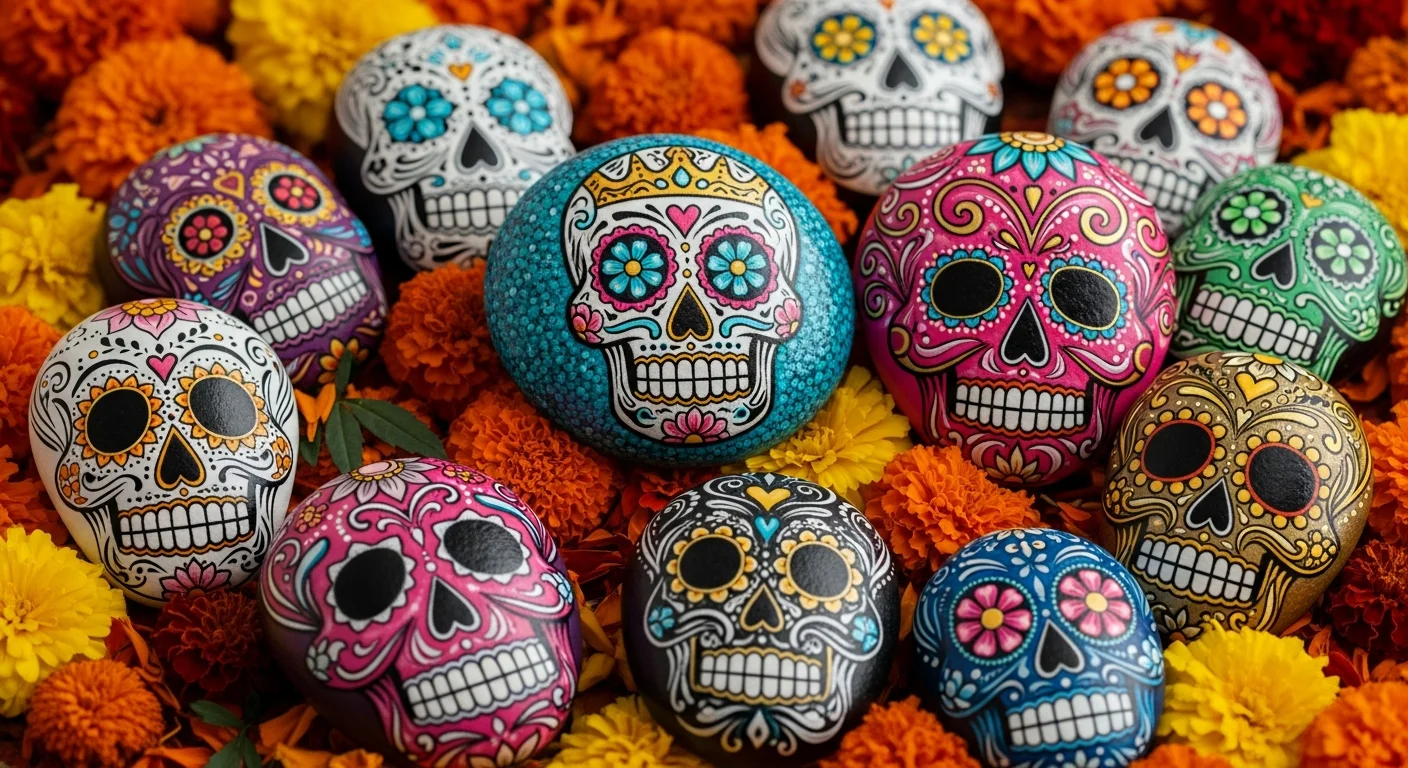
Día de los Muertos rock painting brings one of the world's most visually stunning artistic traditions to the art of painted stones. The holiday, celebrated on November 1–2, is a Mexican and Latin American tradition honouring deceased loved ones with colour, beauty, and joy - making it a perfect inspiration for intricate, vibrant painted rocks.
Sugar skull designs, marigold flowers, butterfly motifs, and bold geometric patterns translate beautifully to smooth river stones. This guide walks you through every element of the tradition and how to recreate it on stone.
The Beauty of Día de los Muertos Art
Unlike Western Halloween's focus on fear and darkness, Día de los Muertos celebrates life and memory. The iconic imagery - ornately decorated skulls, golden marigolds, black butterflies, vibrant patterns - reflects joy and continuation rather than mourning. This philosophy makes the art style uniquely uplifting: bold, detailed, and full of life.
The colour palette is rich and specific: deep magenta, turquoise, golden yellow, coral orange, and black form the backbone of traditional Día de los Muertos aesthetics.

Sugar Skull Design Step by Step
- Base coat: Paint the rock white or cream. Let dry completely.
- Skull shape: Lightly sketch an oval skull shape. Add the eye sockets (large, round, prominent), nose cavity (heart or diamond shape), and teeth.
- Eye decoration: Día de los Muertos eyes are elaborate - fill each socket with a base colour (turquoise or magenta) then add flower petals, swirls, or star patterns inside.
- Floral crown: Above the skull, paint marigold (cempasúchil) flowers, roses, or other blooms in yellow, orange, and red.
- Cheekbones: Add a decorative swirl on each cheek. Traditionally these are floral or geometric.
- Finishing details: Add dots, swirls, hearts, and patterns wherever there is bare white. The more detailed, the more authentic.
- Outline: Trace the skull edges and all major features with black paint for crisp definition.

Marigold, Butterfly and Heart Motifs
Sugar skulls are the centrepiece, but a complete Día de los Muertos rock collection includes companion motifs:
- Marigolds (Cempasúchil): The flower of the dead, believed to guide spirits home. Paint layered petals in amber and yellow on a green stem. The petals should be slightly uneven for a natural look.
- Monarch butterflies: Believed to carry the spirits of the departed. Paint orange and black wings with white dots along the edges. A delicate but striking design.
- Hearts: Sacred hearts or simple love hearts decorated with floral patterns represent the love that connects the living and the dead.
Using Rocks in an Ofrenda Display
An ofrenda is a home altar created during Día de los Muertos to honour deceased family members. Painted rocks make beautiful, durable additions to an ofrenda display, particularly because you can paint them with designs specific to a loved one - their favourite flower, a symbol they valued, or simply their initial surrounded by marigolds.
Once the holiday passes, your Día de los Muertos rocks can be registered on RoxGeo and hidden for strangers to discover - carrying a little of the holiday's spirit of beauty and connection out into the world. See more ideas in our seasonal rock painting guide and our mandala painting guide for dotting techniques that work beautifully for skull decorations.
Frequently Asked Questions
Is it respectful to paint sugar skull rocks without being Mexican?
Día de los Muertos is a living cultural tradition. Engaging with it respectfully - learning its meaning, honouring its symbolism accurately, and not reducing it to mere "spooky Halloween" decoration - is widely considered appreciative rather than appropriative. Avoid mixing it with horror imagery and acknowledge the holiday's true joyful purpose.
What type of rock is best for detailed sugar skull designs?
Smooth, flat, light-coloured river stones between 8–12 cm diameter are ideal. The flat surface gives you a canvas-like working area, and a lighter base reduces the number of white paint coats needed before detailing.