
St Nicholas Day, celebrated on December 6 across Poland, Germany, the Netherlands, Czech Republic, and much of Central and Eastern Europe, is one of the most beloved early December traditions. Children receive small gifts in their shoes or boots left out the night before, and painted kindness rocks make uniquely personal and lasting St Nicholas gifts.
This guide covers the most charming St Nicholas rock painting ideas - from a traditional bishop's face to the iconic gift-filled boot - along with tips for wrapping rocks as festive Mikołajki presents and the best places to hide them if you want to spread St Nicholas Day joy beyond your family. See our full Christmas and Advent rock painting guide for the whole December season.
St Nicholas Day Traditions Across Europe
St Nicholas (or Mikołaj in Polish, Nikolaus in German, Sinterklaas in Dutch) was a 4th-century bishop of Myra known for his generosity. His feast day on December 6 is celebrated quite differently across countries, but the common thread is gift-giving, often focused on children receiving small presents in shoes, stockings, or boots.
- Poland (Mikołajki): Children leave their shoes or boots by the door on the evening of December 5. St Nicholas (Mikołaj) fills them with sweets, tangerines, and small gifts.
- Germany (Nikolaustag): Children receive Nikolaus gifts in the morning, typically sweets and small toys.
- Netherlands (Sinterklaas): The most elaborate tradition - Sinterklaas arrives by steamship from Spain and distributes gifts over several weeks.
- Czech and Slovak Republic: Mikuláš visits on the eve of December 5 with an angel (good children) and devil (naughty children).

Bishop, Boot and Gift Designs
The most effective St Nicholas rocks draw on the holiday's iconic visual vocabulary:
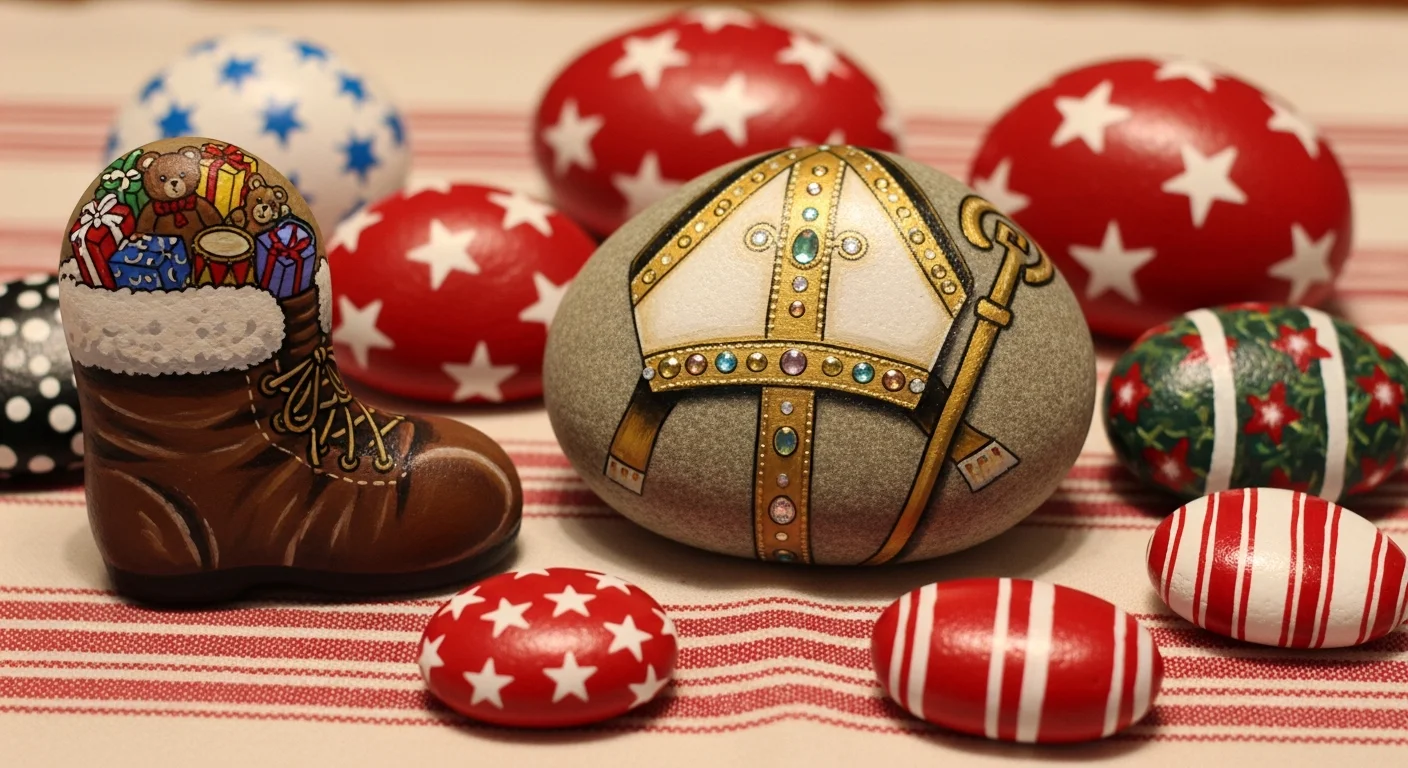
- St Nicholas Face: Paint a kind, bearded face in white and red, topped with a bishop's mitre (pointed hat) in red and gold. A crook (shepherd's staff) can be added to the side.
- The Boot: A tall, classic boot painted in brown with gifts peeking out - a wrapped parcel, a candy cane, a golden coin - is instantly recognisable across all European traditions.
- Candy Cane: Simple but festive - red and white stripes on an elongated stone. Children love them and they are quick to paint in multiples.
- Golden Coins: Round rocks painted gold with a cross or star pattern reference the coins St Nicholas historically distributed to the poor.
- Stars: A classic St Nicholas symbol across European traditions - paint golden five-pointed stars on smooth flat stones.
Easy Kids' St Nicholas Rocks
For children painting their own St Nicholas rocks, these designs are achievable for ages 5 and up with a little guidance:
- Candy cane (red + white stripes, no face needed)
- Golden coin (one colour, stamp pattern)
- Simple star shape in yellow or gold
- A striped gift-wrapped parcel with a bow

Hiding Mikołajki Rocks in Your Community
If you want to spread the St Nicholas spirit beyond your family, hide a few Mikołajki rocks in your neighbourhood on December 5 - the night before St Nicholas Day. Children on their way to school the next morning will find unexpected surprises. Register each rock on RoxGeo so finders can log their discovery and pass the rock forward.
See more Christmas and Advent rock painting ideas for the full festive season.
Frequently Asked Questions
What is the difference between Mikołajki and Christmas?
Mikołajki (December 6) is the feast day of St Nicholas, a bishop celebrated for generosity. Christmas (December 25) celebrates the birth of Jesus. In Poland, both are celebrated, with Mikołajki featuring smaller gifts and Christmas Day featuring the main family celebration.
Can I put a painted rock in a child's shoe for Mikołajki?
Absolutely - a small, flat, beautifully painted stone is a charming, lasting Mikołajki gift that children will keep long after sweets are eaten. Keep the rock small enough to fit in the shoe for the full traditional experience.