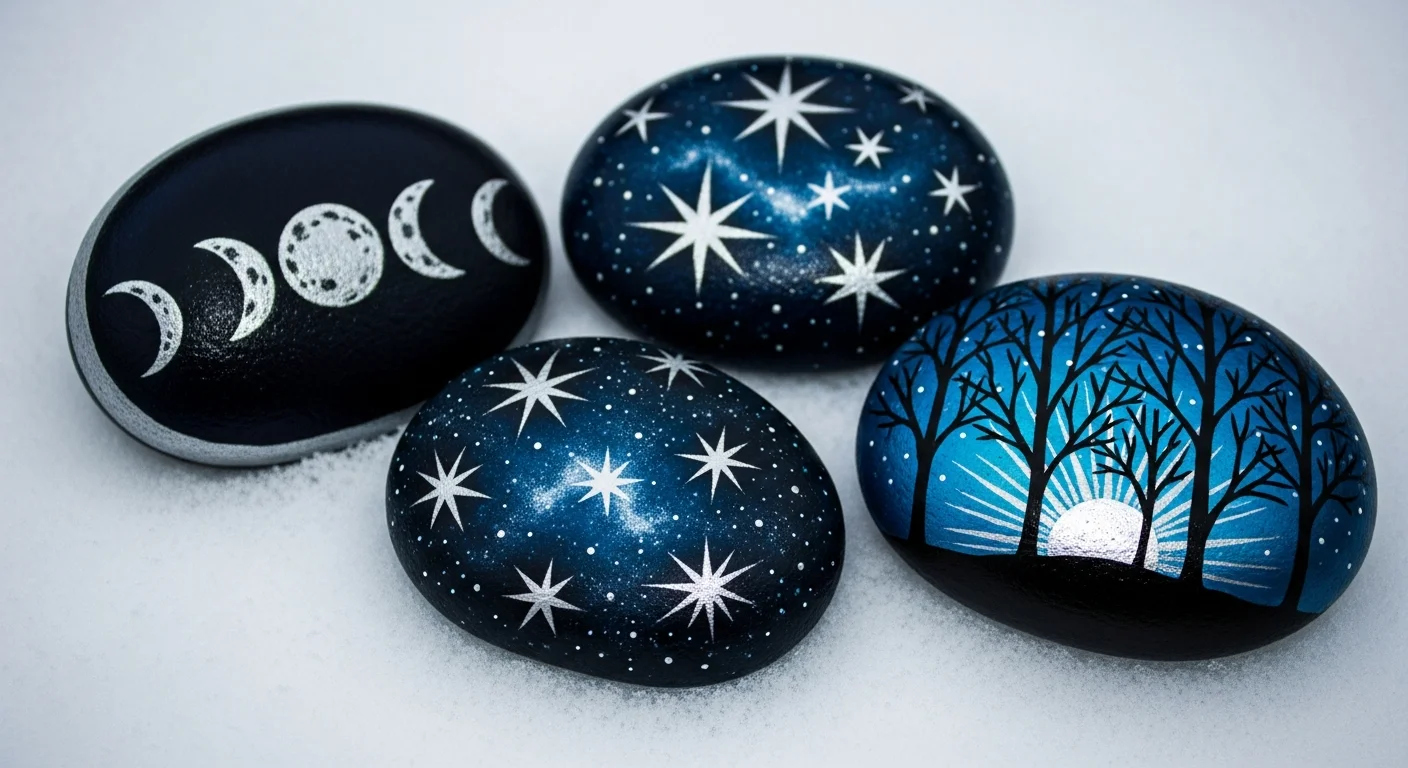

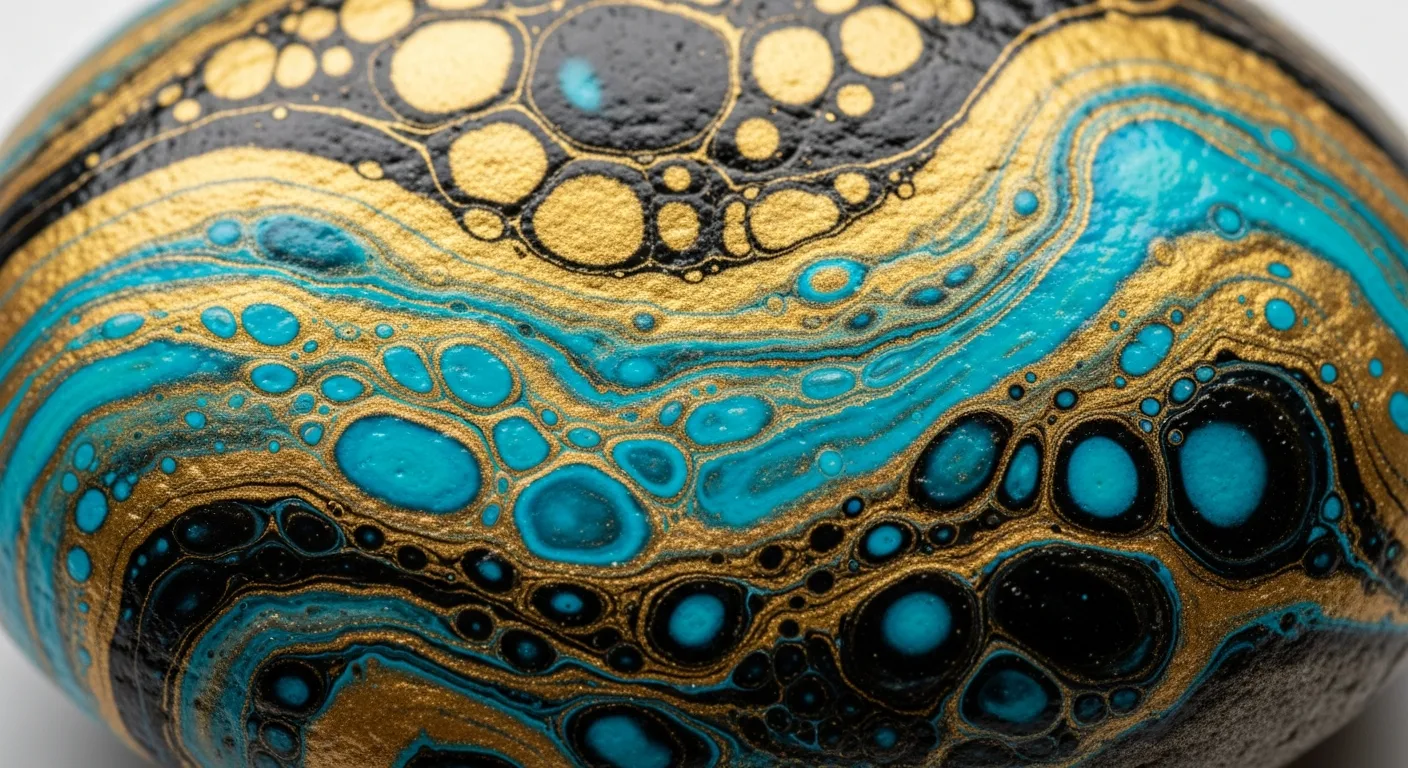
Abstract rock painting is where stone art becomes truly limitless. Unlike figurative designs, abstract techniques produce unique results every single time - the fluid movement of paint, the bleeding of alcohol inks, or the swirling of marbling all create effects that cannot be fully controlled or replicated. That unpredictability is the beauty of it.
In this guide we cover six powerful abstract techniques that transform smooth river stones into conversation-starting works of art. These methods suit different skill levels and budgets, from simple kitchen-counter experiments to more refined studio techniques.
Why Abstract Works So Well on Stone
The natural texture and weight of a stone grounds abstract designs in something tangible. A marbled rock feels precious in the hand. A galaxy pour on stone looks like a window into deep space. Abstract painted rocks also make excellent gifts - they are unique by definition.
Acrylic Pour Painting on Rocks
Acrylic pour painting involves mixing fluid acrylic paint with a pouring medium and pouring multiple colours simultaneously onto a primed stone. Tilt and rotate the stone to let colours flow and blend. The interaction creates organic cell patterns, lace effects, and gradient blooms impossible to paint by hand.
Key tips: Use a cup for each colour. Pour them together into a single cup, then tip it quickly onto the stone. Torch the surface briefly with a kitchen lighter to create cell formations. Work over a protected surface - it is beautifully messy.

Alcohol Ink Techniques
Alcohol inks are transparent, highly pigmented dyes that flow freely across non-porous surfaces. A white-primed stone is an ideal base. Drop several ink colours onto the stone and use a straw to blow them across the surface, or tilt the stone to let gravity guide the flow. Add a drop of isopropyl alcohol after the colours have spread to create blooms of translucent colour.
Marbling with Nail Polish
The classic marbling technique involves floating nail polish on the surface of a bowl of water, swirling it with a toothpick, then dipping the stone through the surface. The pattern transfers to the stone instantly, producing elegant, vein-like patterns reminiscent of precious marble.
Splattering and Drip Effects
Load a stiff brush with watered-down paint, hold it above the stone, and drag your finger across the bristles to release a fine spray of droplets. Multiple layers in contrasting colours create a dynamic, energetic composition. Drip painting - holding the stone vertical and letting paint run - adds directional movement.

Mixed Media Combinations
The most striking abstract rocks often combine techniques: a pour base with alcohol ink accents, or a marbled background with metallic paint details on top. Always let each layer dry fully before adding the next.
Abstract rocks are perfect for hiding in unexpected places. Register yours on RoxGeo and watch where your unique creation travels. For more technical guidance, see our mandala guide and patterns tutorial.

Frequently Asked Questions
Do I need expensive supplies for abstract rock painting?
No. Nail polish marbling requires only nail polish and a bowl of water. Acrylic pour can be done with craft store paints and diluted PVA glue. Alcohol inks are the priciest option but a few small bottles go a long way.
How do I seal abstract painted rocks?
Use a spray varnish rated for outdoor use. For alcohol ink rocks, choose a UV-resistant sealant - standard varnishes can make alcohol inks bleed. Apply 2–3 light coats, letting each dry fully before the next.
Can I do abstract techniques on textured stones?
Smooth stones work best for most abstract techniques, especially pouring and marbling. For textured stones, splattering and drip effects work well as the texture adds visual interest to the random drops.