
Painting rocks with children (Steine bemalen in German, one of the activity's most-searched terms across Germany, Austria, Switzerland, and the Netherlands) is more than a craft - it is a developmental activity that combines fine motor skill practice, creative expression, ecological awareness, and social-emotional learning in one simple, low-cost project that children of all ages love.
Developmental Benefits by Age Group
Ages 2–4 (Kleinkinder): Focus on sensory exploration rather than precise design. Finger painting on smooth stones builds fine motor coordination. Introduce simple stamps (cut potato or cork) for pattern making. Talk about the stone's texture, weight, and temperature. This age group learns that objects can be transformed through art.
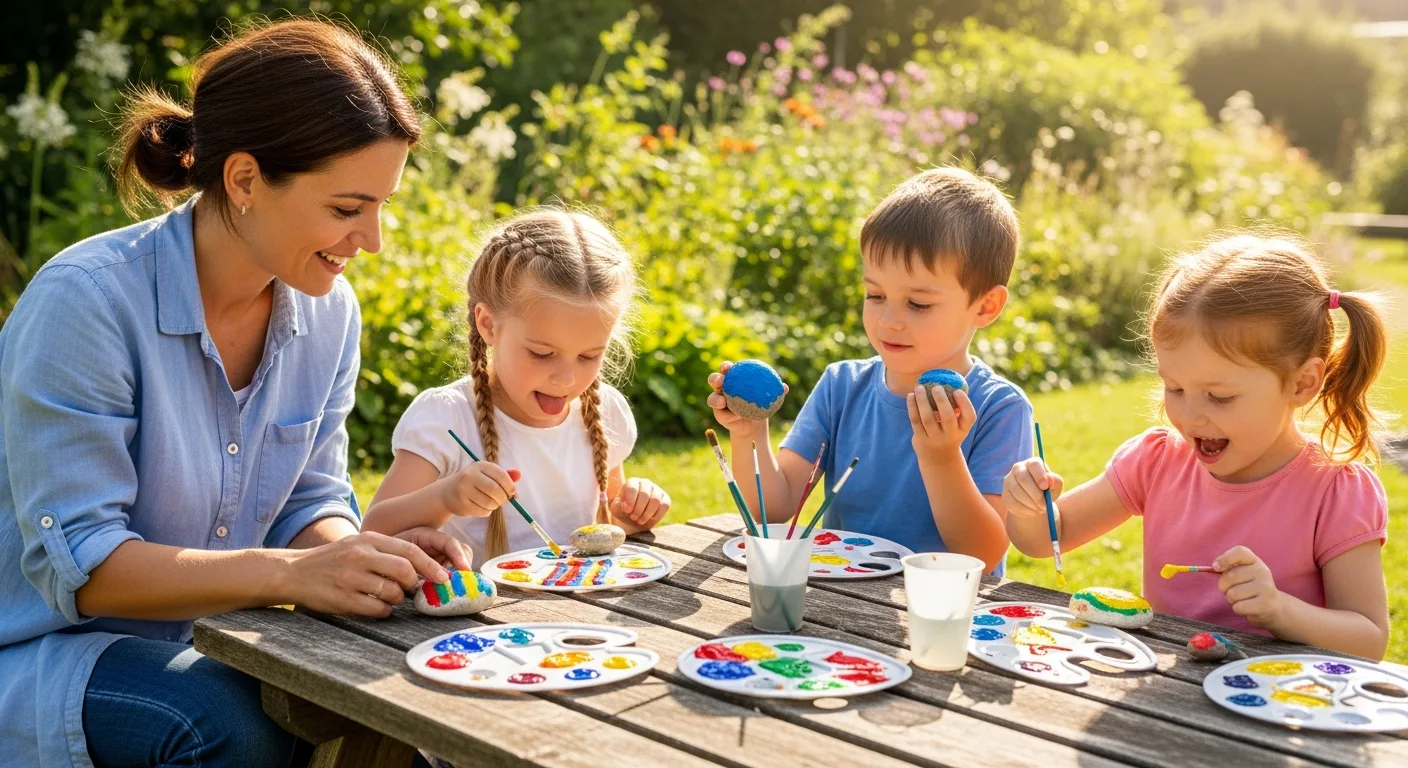
Ages 5–7 (Kindergarten/Vorschule): Children at this age can handle brushes independently. Introduce simple designs: a sun, a flower, a face, a ladybird. Letter and number rocks make great learning tools - painting the alphabet on stones creates manipulable letter sets for literacy activities.
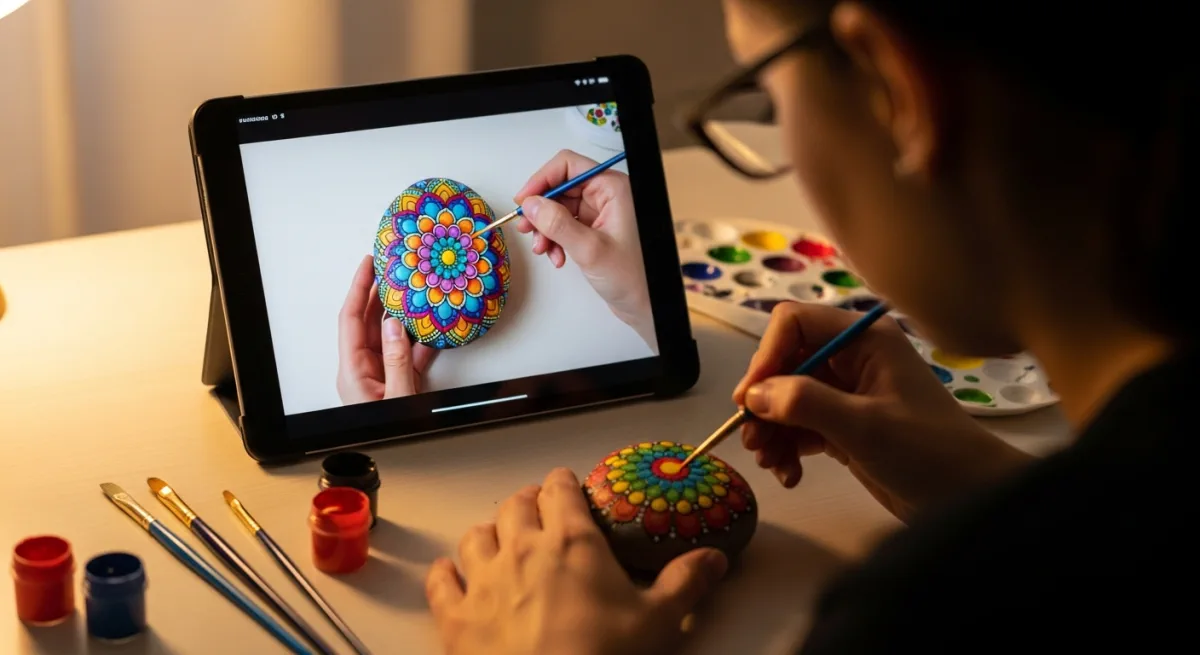
Ages 8–12: This age group can tackle more detailed designs: animals, mandalas (with compass guidance), botanical subjects, map-inspired designs. Introduce the concept of RoxGeo tracking - children love the idea of following their rock's journey after hiding it.
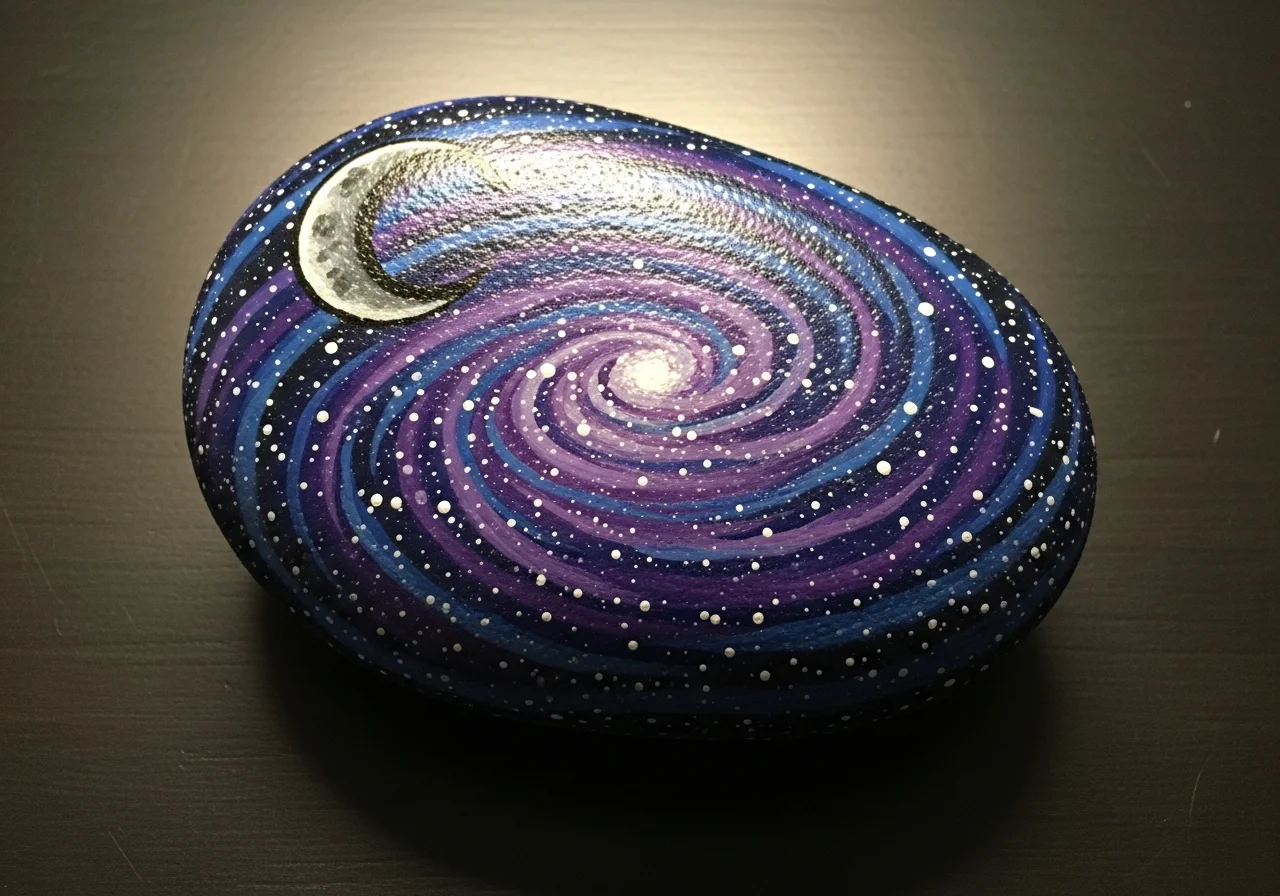
Ages 13+: Teenagers can explore advanced techniques: pour painting, alcohol ink, precise mandala geometry, calligraphy, and multi-session illustrated scenes. Encourage personal artistic voice - their rock designs should reflect their own aesthetics, not a provided template.

Safety First: Choosing the Right Materials for Children
Children's safety is paramount when choosing painting materials:
- Paints - Use non-toxic, water-based acrylic or children's poster paints. Look for CE certification and the AP (Approved Product) seal from the Art and Creative Materials Institute. Avoid spray paints, oil-based paints, and any product labelled for professional use only.
- Varnish - Use brush-on, water-based varnish rather than spray aerosols with young children. For very young children, skip sealing entirely if the rock will be an indoor decoration.
- Brushes - Plastic-handled, synthetic brushes are safest. Avoid brushes with metal ferrules that could pose risk if damaged.
- Protective clothing - Aprons or old shirts. Acrylic paint is washable when wet but permanent when dry.

School and Classroom Projects
Rock painting offers rich cross-curricular connections for classroom use:
- Geography - Paint rocks inspired by the landscapes and wildlife of different countries. Register with RoxGeo and follow where rocks travel as a living geography lesson.
- Natural science - Study rocks as geological objects before painting them: identify minerals, discuss formation, learn about erosion. See our rock science guide for more.
- Mathematics - Mandala design incorporates geometry: symmetry, angle, ratio, and pattern. Use compass and ruler for precise mathematical mandala construction.
- Language - Letter and word stones for early literacy. Message rocks for practising sentence construction and creative writing.
- Social-emotional learning - Kindness rocks and community hiding teaches empathy, perspective-taking, and the joy of giving anonymously.
Setting Up a Classroom Rock Station
For a class of 25–30 students: Pre-wash and dry 60+ stones (two per student). Cover tables with newspaper or reusable plastic covers. Prepare a shared paint station with one jar of each colour - children take small amounts onto individual palettes. Set up a dedicated drying table away from the working area. Allow 48 hours before sealing and a further 24 hours before sending rocks home.

Frequently Asked Questions
What age can children start painting rocks?
Children as young as 18 months can safely finger-paint on smooth stones under close adult supervision. For independent brush painting, age 3–4 is a realistic starting point. The activity scales beautifully in complexity, remaining engaging throughout childhood and adolescence.
How do I prevent children from putting paint-covered hands in their mouths?
Provide waterproof finger covers or silicone finger caps for very young children. Ensure non-toxic, food-safe paints are used for toddlers. Have a wet cloth at every workspace for immediate cleanup. Brief older children on the importance of not touching their faces during painting.
How do we hide rocks as a class without losing track of them?
Register each rock individually on RoxGeo before the class hiding event. Maintain a class register linking each rock's number/code to its creator. When rocks are found and logged, share the notifications with the class during a show-and-tell session - this creates a motivating feedback loop that validates children's creative effort.