
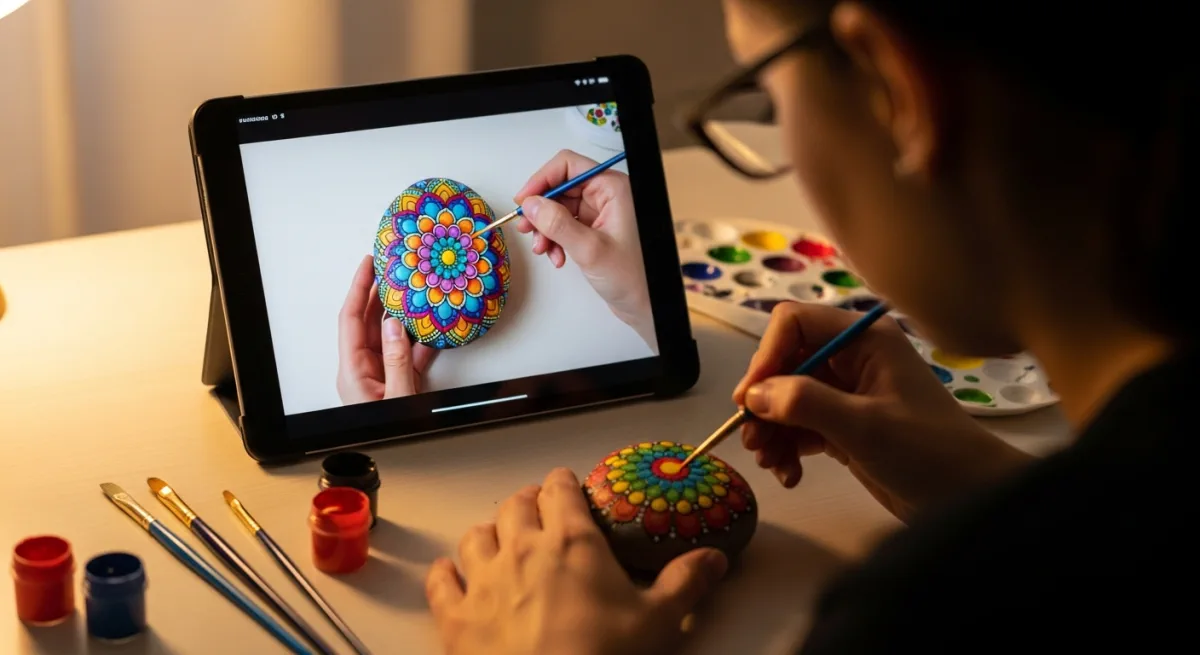
Video tutorials have transformed how people learn creative skills. For rock painting, watching an experienced hand demonstrate brush pressure, colour blending and dot-art techniques in real time is simply more effective than any written description. This guide curates the best rock painting video resources for beginners - from YouTube channels to structured online courses - and explains how to make the most of learning through video.
Why Video Tutorials Are Ideal for Learning Rock Painting
Rock painting is a fundamentally tactile skill. The physical aspects - how hard to press a brush, when to let paint dry before adding the next layer, the exact speed of a stroke - are very difficult to communicate in words alone. Video captures:
- Brush pressure and angle in real time
- The speed of different techniques (slow deliberate for fine detail, fast sweeping for backgrounds)
- Colour mixing on the palette before application
- How designs actually look at different stages of completion (so you know whether your partly-finished rock is on track)
The key is to watch the whole tutorial once before starting, then pause and work alongside the video step by step on the second viewing.

What to Look for in a Good Rock Painting Tutorial
Not all rock painting tutorials are created equal. Look for these qualities:
- Demonstrates technique, not just result - The best tutorials explain why they do something, not just what they do.
- Works in real time - Avoid time-lapse-only videos. You need to see the actual pace of work.
- Shows mistakes and corrections - Tutorials where the creator shows and fixes mistakes are more educational than impossibly perfect performances.
- Labels materials clearly - Good tutors tell you what paint, brush and sealant they are using and offer alternatives.
- Organised by skill level - Look for channels that explicitly label beginner, intermediate and advanced tutorials.
Techniques Worth Learning from Video First
Certain techniques are much better learned from video than text:
- Wet-on-wet blending - The timing and brush pressure involved in smooth colour blending is almost impossible to describe accurately in words.
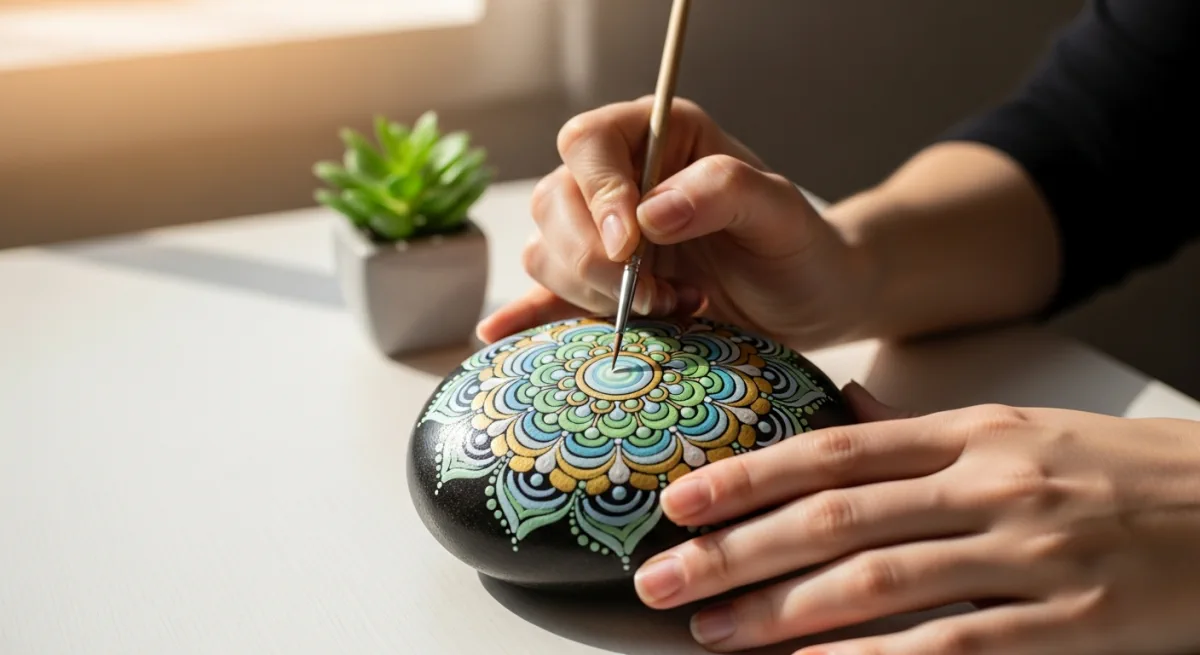
- Dot art mandala - Watching a mandala build outward from the centre makes the spatial logic immediately clear. Our own mandala guide also provides step-by-step written support.
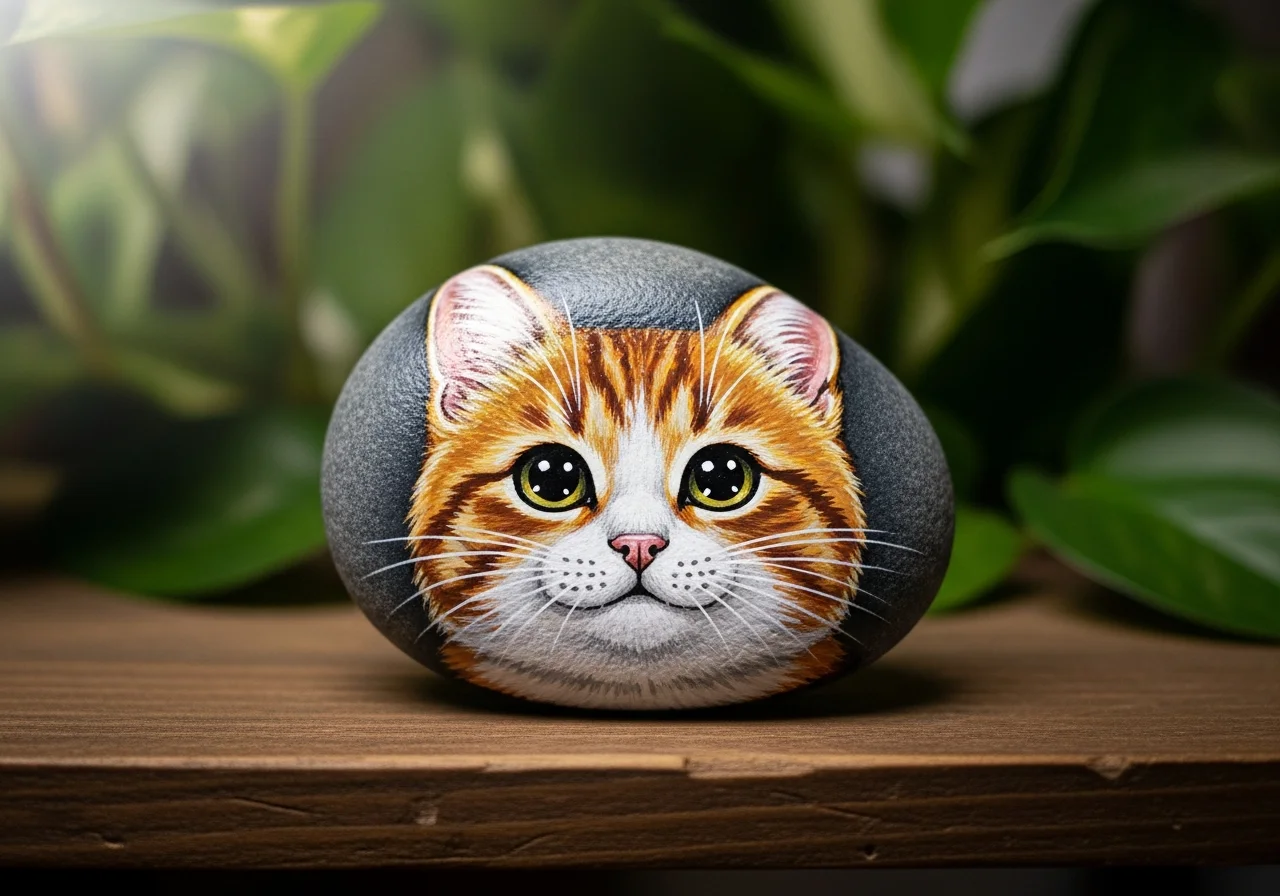
- Animal fur and feather techniques - Short, directional brushstrokes that suggest fur texture need to be seen in motion to understand.
- Using a dotting tool - The amount of paint on the tip and the pressure needed for consistent dots is a physical skill learned by watching and copying.
From Beginner to Advanced: A Self-Guided Learning Path
Structure your video learning with this progression:
- Week 1–2: Base coating, simple shapes, dot art. Aim to complete 6 basic rocks.
- Week 3–4: Colour mixing, gradients, simple animals. Practice 4 rocks with each new technique.
- Month 2: Mandalas, stencil work, landscape basics. Enter a rock in a community challenge.
- Month 3+: Portraits, advanced animals, architectural detail. Share your work in the RoxGeo community.

Applying What You Learn: The RoxGeo Community
The most motivating way to develop rock painting skills is to share your progress publicly. Register your practice rocks on RoxGeo and hide them after each tutorial. Watching your creations travel - and seeing finders respond positively - provides powerful motivation to continue improving. Many RoxGeo users describe finding their own rock months later across the country as one of the most surprising creative joys they have experienced.
Frequently Asked Questions
How long does it take to learn rock painting from online videos?
Most beginners achieve satisfying results within two to four weeks of regular practice (three to four sessions per week of one hour each). Specific techniques like dot mandalas may take one to two dedicated sessions to master. Advanced skills like realistic animal portraits may take three to six months of consistent practice.
Do I need expensive materials to follow online tutorials?
No. Most successful tutorial creators use mid-range acrylic paints costing £5–15 for a starter set. Good quality brushes (a few key sizes rather than a large generic set) matter more than expensive paint. See our rock painting supplies guide for specific recommendations.