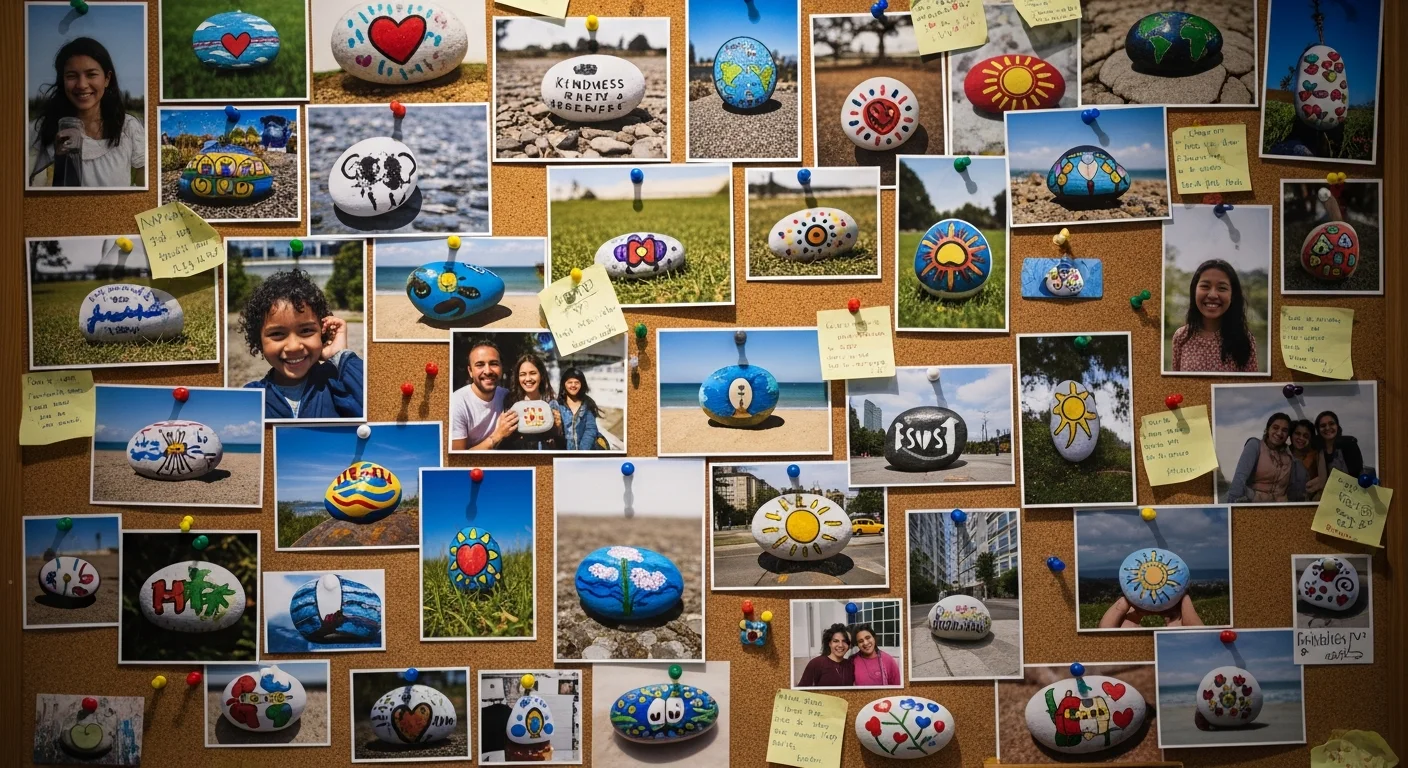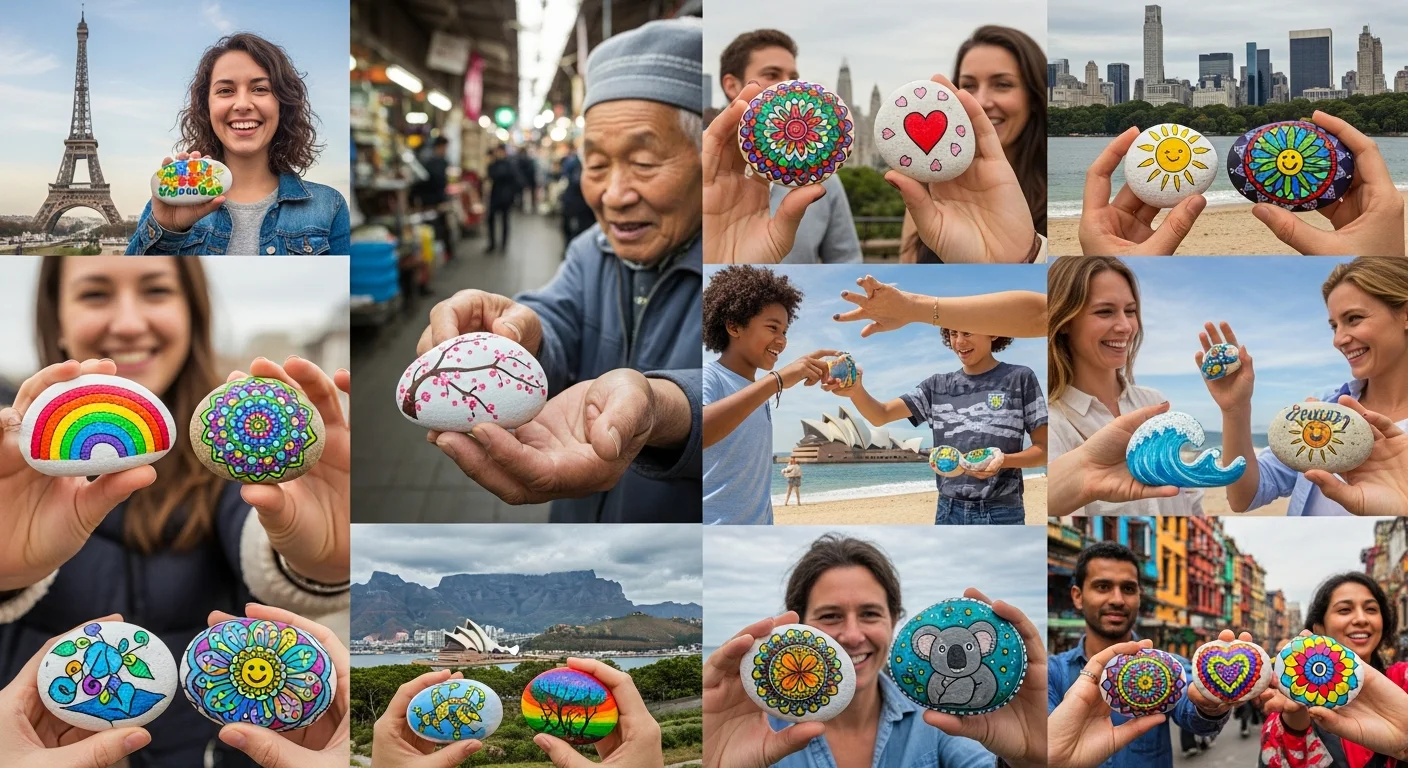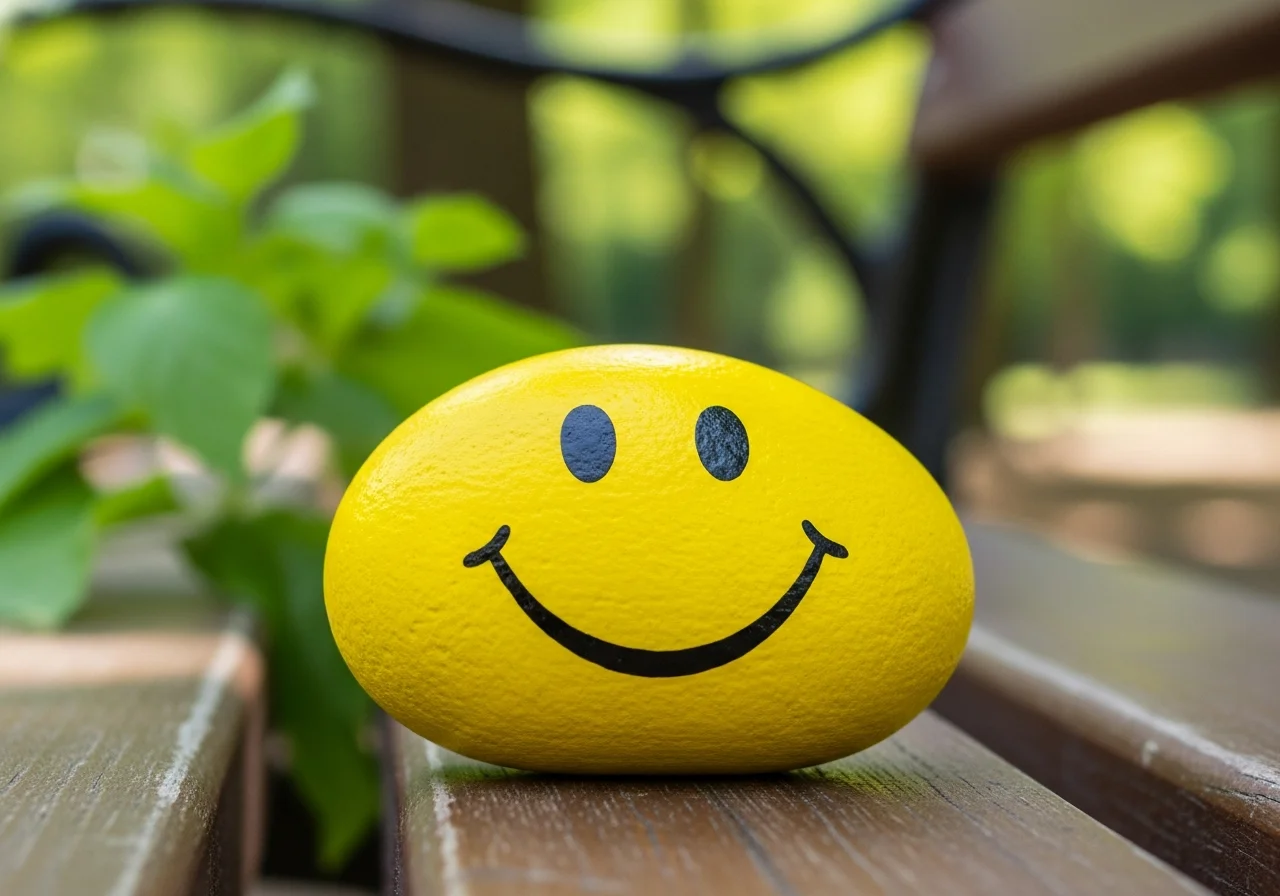
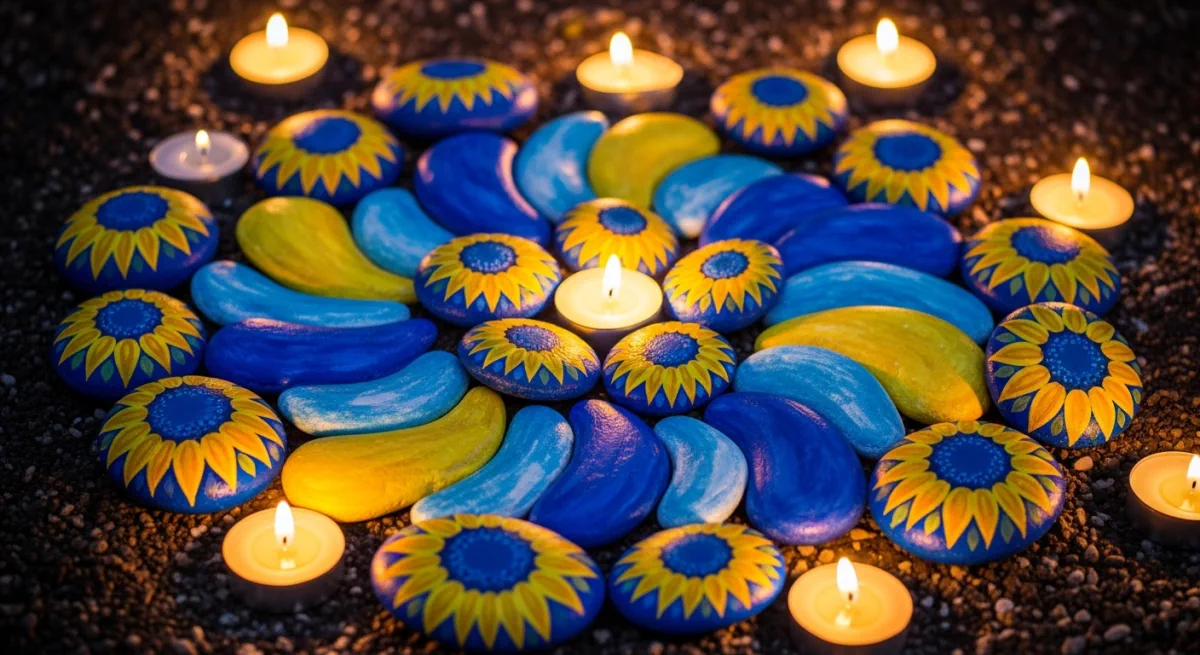
Art has always been a language of solidarity. When words feel inadequate in the face of suffering, the act of creating something beautiful - and sharing it - becomes a powerful statement of care, presence and hope. Across Poland, Germany, the UK, and dozens of other countries, painted rocks with sunflower designs and messages of hope have become one of the most visible expressions of community solidarity in recent years.
This guide explores how painted stones can carry meaningful messages across borders, provides design inspiration for solidarity rocks, and explains how to organise a community solidarity rock project that connects people through shared creative action.
Art as a Language of Solidarity
Kindness rocks have long been used to lift the spirits of strangers - left on park benches, in hospital gardens, along hiking trails. The same creative act, when applied with intention during times of conflict or crisis, takes on an additional dimension: it becomes a public declaration that we see you, we stand with you, we have not forgotten.
Painted rocks are particularly effective solidarity symbols because they are:
- Permanent - Unlike a social media post, a sealed painted rock lasts for years.
- Physical - There is something profoundly human about holding a small handmade object created by another person with care.
- Shareable - Rocks can travel. A solidarity rock painted in one country can end up in another, carrying its message across borders through RoxGeo's tracking system.

Sunflower and Hope Designs
The sunflower is a powerful symbol of warmth, resilience and the turning toward light - making it perfect for solidarity rock art. Here are the most meaningful designs:
- Single sunflower - A bold yellow sunflower head with a brown seed centre on a sky blue background. Paint petals radiating outward from the centre using a medium flat brush.
- Sunflower field - A horizon line with multiple sunflower stems against a blue and gold sky. Even in miniature on a pebble, this evokes the vast Ukrainian landscape.
- Heart in sunflower colours - A simple heart shape divided diagonally, one half blue and one half gold.
- Wheat sheaf - A bunch of golden wheat stalks tied with a simple knot - a symbol of harvest, abundance and shared nourishment.
- Dove of peace - A white dove silhouette on blue, carrying a small olive branch or flower.
Creating a Community Solidarity Project
A solidarity rock project works best when it brings a community together around a shared creative act:
- Announce a painting session - Book a community space, a library meeting room or simply set up tables in a park. Invite people of all ages to come and paint solidarity rocks together.
- Provide materials - Supply smooth pebbles, blue and yellow acrylic paint, brushes and sealant. The colours themselves are a statement.
- Document the day - Photograph participants and their finished rocks. Share with permission on social media to amplify the message.
- Hide the rocks widely - Place solidarity rocks in prominent community spaces: hospital entrances, town hall steps, libraries, schools.
- Register on RoxGeo - Every rock that is registered creates a data point on the community's solidarity map. As finders check in from across the country or world, the project's reach becomes visible.

How RoxGeo Tracks Kindness Across Borders
One of the most moving aspects of solidarity rock projects tracked through RoxGeo is watching rocks travel from one country to another. A solidarity rock painted in Warsaw found its way to Paris when a Polish student took it with her during a study trip. A group of solidarity rocks from a UK school project were photographed by finders in Germany, the Netherlands and Ireland. Each check-in is a small act of solidarity extended further - a chain of compassion that no single person planned but many people participate in.
Frequently Asked Questions
Can I send solidarity rocks by post to another country?
Small painted rocks can be mailed internationally. Declare them as "decorative stones" or "art objects" on customs forms. A small padded envelope is sufficient for most postal services. Some communities have organised deliberate "rock exchanges" between solidarity groups in different countries.
How do I ensure my solidarity message is culturally appropriate?
Stick to universal symbols - sunflowers, doves, hearts, candles, stars - that transcend language and political context. Avoid text that might be misread across cultures. The painted rock's power lies in its visual universality.