
All Saints Day (1 November) is one of the most deeply felt observances across Central and Southern Europe. In Poland, the Czech Republic, Slovakia, Croatia and Italy, millions of people visit cemeteries to light candles, place flowers and honour those who have passed. Painted memorial rocks have become a meaningful and growing part of these traditions - handcrafted stones placed at graves or given to grieving families as expressions of comfort and love.
This guide provides respectful design ideas for memorial rocks, advice on placement, and thoughts on how creative art can support the grieving process at this poignant time of year.
The Tradition of All Saints Day
All Saints Day (also known as All Hallows' Day) is followed by All Souls Day on 2 November, when prayers are offered for all the faithful departed. Together, these two days form one of the most visually beautiful traditions in Catholic and Orthodox Europe: cemeteries glow with thousands of candles, covered in chrysanthemums, roses and devotional objects.
Painted memorial rocks fit naturally into this visual and emotional landscape. They are permanent, weather-resistant mementos that can be placed beside a headstone or incorporated into a family's annual commemoration ritual.

Respectful and Gentle Design Ideas
Memorial rock designs should convey dignity, peace and love. The most appropriate styles are:
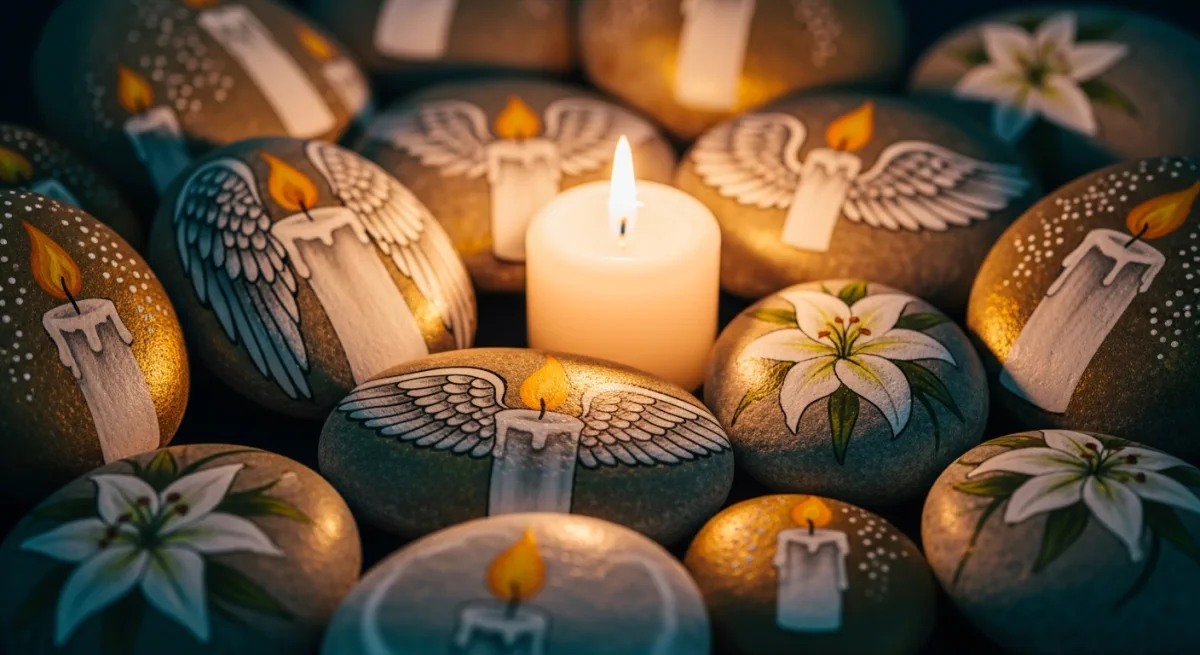
- Candle flames - A single flame in gold and amber on a dark background. Simple, powerful and universally understood.
- White lilies - The lily is the traditional flower of remembrance. Painted in white with pale yellow stamens on a soft green or midnight background.
- Doves - A white dove in flight on a pale grey or blue-white sky background symbolises the soul's journey and peace.
- Stars and constellations - Many people find comfort in the idea that loved ones become stars. A single bright star or a small constellation on a night sky rock is deeply meaningful.
- Forget-me-nots - The tiny blue flower of remembrance, arranged in a small cluster.
Candle, Angel and Lily Motifs
These three motifs are the most requested for memorial rocks:
- Candle - Paint a narrow cylindrical candle shape in cream or white. Add a golden flame at the top with a thin orange core. A soft halo glow in pale yellow around the flame adds depth and warmth.
- Angel silhouette - A simple kneeling or standing angel silhouette in white on a midnight blue background. Wings can be suggested with just a few brushstrokes.
- White lily - Paint three or five trumpet-shaped petals radiating from a central point, each with a delicate darker vein. Add thin stamen lines in ochre yellow emerging from the centre.

Creating Memorial Rocks as Gifts
A painted memorial rock makes a profoundly thoughtful gift for a bereaved family member or friend. Consider:
- Painting the deceased's favourite flower or animal as the design.
- Incorporating the birth month's birth flower (e.g., November chrysanthemum, December holly).
- Using the person's favourite colours for the palette.
- Presenting the rock in a small velvet pouch or wooden box with a handwritten note.
Unlike cut flowers, a painted rock lasts indefinitely. Many grieving families report keeping memorial rocks for years, finding great comfort in holding them during difficult moments.
Placing Rocks Respectfully at Memorial Sites
If placing rocks at a public cemetery, always ask permission from the family or cemetery management if unsure whether rocks are welcome at a specific grave. At family graves where you are the caretaker, rocks can be placed freely. Keep designs dignified and ensure the rock is secure and will not obstruct other visitors or maintenance. The Jewish tradition of placing a stone on a grave to mark a visit may also resonate - though painted stones carry a different, more personal meaning.
Frequently Asked Questions
Is it appropriate to hide All Saints Day memorial rocks in public?
Rather than hiding memorial rocks for strangers to find, All Saints Day rocks are better suited to being given directly to grieving people or placed at specific memorial sites. However, rocks with universal messages of hope and peace can certainly be hidden in appropriate community spaces.
What paint is safe to use near cemetery soil and plants?
Sealed acrylic paints are non-toxic once cured and pose no harm to cemetery plants or soil. Avoid using glitter or plastic embellishments that could break down and pollute the environment.